How Black Lives Matter Is Challenging India’s Obsession With Fair Skin
- Beauty Beyond Color
- Mar 31, 2022
- 3 min read

Updated: Apr 7, 2022
"Brands understand that antagonizing significant sectors of outspoken consumers who can sway public opinion for or against them is poor business," said Karthik Srinivasan, an Indian branding and communications consultant.

Fair & Lovely, a skin-lightening company that made more than $500 million in sales in India last year, announced on June 25 that the word "fair" would be removed from its products. Indian advertising has promoted a link between skin fairness and career success, beauty, and social prestige for decades. Fair & Lovely was one of the first firms in India to adopt the societal yearning for light skin into a beauty product in 1975. This firm, which has spent 45 years using skin-whitening face creams to become a household name, is now attempting to rebrand itself.
Unilever, the brand's parent business, is facing backlash as a result of the Black Lives Matter campaign. Unilever has been criticized for its "performative wokeness," after announcing its support for the movement and donating more than $1 million. Critics point out that the firm has spent four decades in Southern Asia promoting fair skin, with the majority of its commercials depicting women and men with darker skin tones being mocked or looked down upon. They aren't, however, the only company attempting to keep up with the times.
Shaadi.com, a South Asian dating site, also stated that it will be eliminating its skin-tone search function, which allowed users to look for people with fair, "wheatish," or dark complexions. Of course, this happened only after Hetal Lakhani, an Indian-American woman, initiated a campaign against the site's proprietors.
"I've been called wheatish on numerous occasions, and it always sounded condescending," Lakhani told VICE. "It seemed as if I had lost my merit because I am unfair." According to a statement from Shaadi.com, the filter was being removed since it "wasn't serving any purpose."

On the same day, Johnson & Johnson declared that all skin-lightening products would be pulled from store shelves after being accused of supporting systemic racism.
From Aunt Jemima's 130-year-old stereotypically racial pancake mix to a Chinese toothpaste named Darkie that portrayed a grinning man in blackface, there has been a worldwide wave of apologies and product withdrawals in recent weeks.
When Indian celebrities such as Priyanka Chopra, Disha Patani, and Sonam Kapoor came out against skin-color discrimination, social media users reacted by stating they were contributing to the problem by advertising fairness creams. India's concern with fair skin has fueled a multibillion-dollar industry of skin bleaching, laser treatments, chemical peels, steroids, and even intravenous injections.
The debate about whether fair skin is associated with beauty began with a proposed modification to advertising regulations that would make promoting skin fairness a criminal violation. Fair & Lovely modified marketing campaigns based on the concept of "fairness" after the revelation in February, replacing the word with "glow."
"Brands understand that antagonizing significant sectors of outspoken consumers who can sway public opinion for or against them is poor business," said Karthik Srinivasan, an Indian branding and communications consultant.
Many social media users doubt that the adjustment in branding methods will have an impact on behavior in a society where fairness creams outsell Coca-Cola and tea.
"There are certain goods with even more crude names, such as Vini's White Tone," Srinivasan points out. "This move is symptomatic of the fact that customers do have a voice, and brands must pay attention." In terms of product benefits, Hindustan Unilever has a 45-year head start on convincing us what it's for, so regardless of what new name they give their products, that's unlikely to be forgotten very soon."
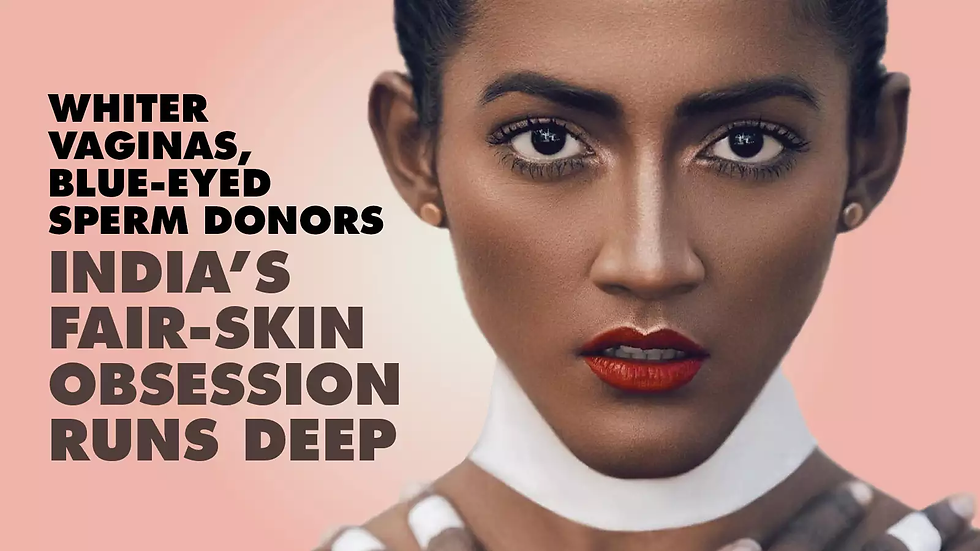
According to Srinivasan, true change may be achieved by cultivating role models in a variety of fields, including film, politics, academia, and sports, who not only preach wisdom but also live by a code that prohibits skin color discrimination.
"The advertising sector should have accepted responsibility a long time ago, but still, this is a watershed moment," says Kavitha Emmanuel, founder of Women of Worth, a women's issue NGO. Emmanuel, who started the "Dark is Beautiful" campaign in 2009 to challenge colorism and insulting stereotypes, believes the anti-racism movement has served as a wake-up call for companies that choose to pretend to be ignorant.
According to a 2019 Grand View Research estimate, the global skin-lightening market will be worth $13.7 billion by 2025, with Asia-Pacific accounting for 54.3 percent of that total.
The problem with India's fixation with fairness isn't as serious as the incidences of caste and religion-based prejudice that occur.
Emmanuel explains how discrimination based on skin tone is linked to other harmful attitudes. "Colorism is intricately tied to other forms of structural injustice, such as racism, classism, and casteism." It's both intra and inter-racial. Dark-skinned people are often connected with the so-called lower caste and are discriminated against."
https://www.vice.com/en/article/m7j7g4/how-black-lives-matter-is-changing-indias-obsession-with-fair-skin


Dark is Beautiful ❤️